
In order to enhance the search ranking of the online stores, structured optimization will help out a lot. Higher rankings on search engines boost visibility traffic and revenue in the competitive digital marketplace. If your product is not optimized well, then even the best product will go unnoticed among buyers.
Ecommerce SEO isn’t an option anymore. It is a key growth strategy for internet companies looking for sustainable traffic. Implementing strategies such as keyword optimization, site speed improvement and structured data help search engines better index product pages. It helps to improve indexing and ranking potential over time.
The phrase boost ecommerce search ranking is linked to strategies to enhance product visibility in a search engine. If it is done properly, it helps businesses reach the right users who are looking for a product. This increases conversions and strengthens brand authority.
In this guide, we will look at some practical methods, comparison and step by step techniques to improve the performance of ecommerce SEO effectively and sustainably.
Ecommerce SEO improves the visibility of all online stores on search engines. Product page optimization, category structuring and other technical fixes. The objective here is to boost organic traffic without relying too much on ads.
To raise ecommerce search rank, must know how search engines evaluate website. Relevance, UX, or Page Authority is factors that influence the rankings. Providing clear, quick, and useful content improves search engine ranking.
An advantage of ecommerce SEO is growing traffic for life. Organic ranking attracts visitors without any continuous cost per click unlike paid campaigns. Online merchants find SEO to be extremely cost-effective.
User behavior is another important factor. Websites that are able to lower their bounce rate and increase the session of users tend to rank better. It shows search engines the content is valuable for users.
SEO Element | Purpose | Impact on Ranking |
Keyword Optimization | Targets relevant search queries | Improves search visibility |
Site Speed | Enhances overall user experience | Reduces bounce rate and improves ranking |
Mobile Optimization | Ensures smooth mobile usability | Boosts mobile search performance |
Structured Data | Helps search engines interpret page content | Improves indexing and rich results |
Improving ecommerce visibility requires a combination of technical and content-based strategies. They help in crawling, indexing, and ranking your website by search engines correctly.
The success of an e-commerce site heavily relies on on-page SEO. The optimization of product titles, descriptions, and Meta tags, etc. The meaningful use of favored search terms expressive for one of your webpage’s prominently features.
Another important point is internal linking. It assists in the distribution of authority across pages and the improvement of navigation. The possibility of ranking for various product pages also increases.
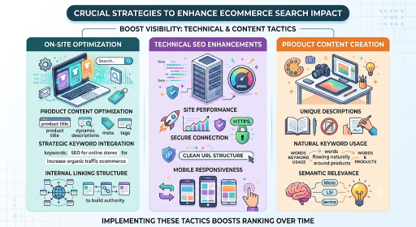
An organization can guarantee that the website runs properly with help from technical SEO. Fast loading speed, secure connection, and clean URLs are important. These factors affect ranking performance directly.
Mobile responsiveness is also crucial. Ecommerce websites are predominantly browsed on mobiles. Having a mobile friendly design enhance the engagement and the ranking potential of your site.
High-quality product descriptions help search engines and users find you. Product pages should not have duplicate content. Create distinctive and engaging descriptions instead.
Employing these tactics helps businesses significantly improve ecommerce search ranking over time.
We must compare optimized vs. non-optimized ecommerce websites to know the effect of SEO strategies. It will enable you to spot the difference clearly.
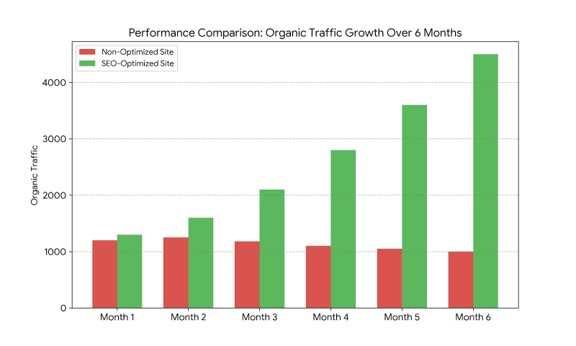
Implementing SEO is not without planning. Here are some practical steps which can improve rankings.
Commence by performing keyword research. Find keywords associated with your products. Use long tail keywords based on search intent.
Next, optimize product pages. Each page must have a unique page title description and Meta tags. Prevent repetition among similar offers.
Caching and optimized images can help improve website speed. A faster website gives users better experience and lower bounce rates.
Increase the internal linking structure. Make the relationship between products and categories logical. Search engines can crawl your website in an easier way.
Here are two important things to do.
Moreover, concentrate on creating trust signals such as reviews and ratings. Users and search engines are affected by these factors.
In order to increase ecommerce search rating, consistency is key. SEO takes time to show results but has long-term benefits if done correctly.
In order to successfully boost ecommerce search ranking, you need a long term SEO strategy that focuses on optimization, content and tech performance. Solutions that are quick rarely lead to lasting success in ecommerce.
Search engines prefer value, speed, relevance websites and not ones. Through improved product pages, optimizing the technical structure, and targeted keywords, online stores may improve visibility.
Consistent SEO efforts will gradually lead to greater organic traffic, higher conversion rates and improvement in brand authority. Those businesses that do early investment in SEO gain a competitive advantage over time.
In the end, ecommerce SEO does not just mean ranking high; it refers to the process of building a lasting digital presence that continuously attracts customers without relying on paid ads, and with the right strategy, any online store can achieve measurable and long-term growth in search performance, an approach aligned with solutions offered by Shartor.
