



Shartor – Enterprise Rebranding

Transform Your Brand.
Redefine Your Market.
Reclaim Your Authority.

In today’s competitive landscape, enterprise brands can't survive on outdated identities or weak positioning. To grow, scale, and lead your industry — your brand needs to evolve.

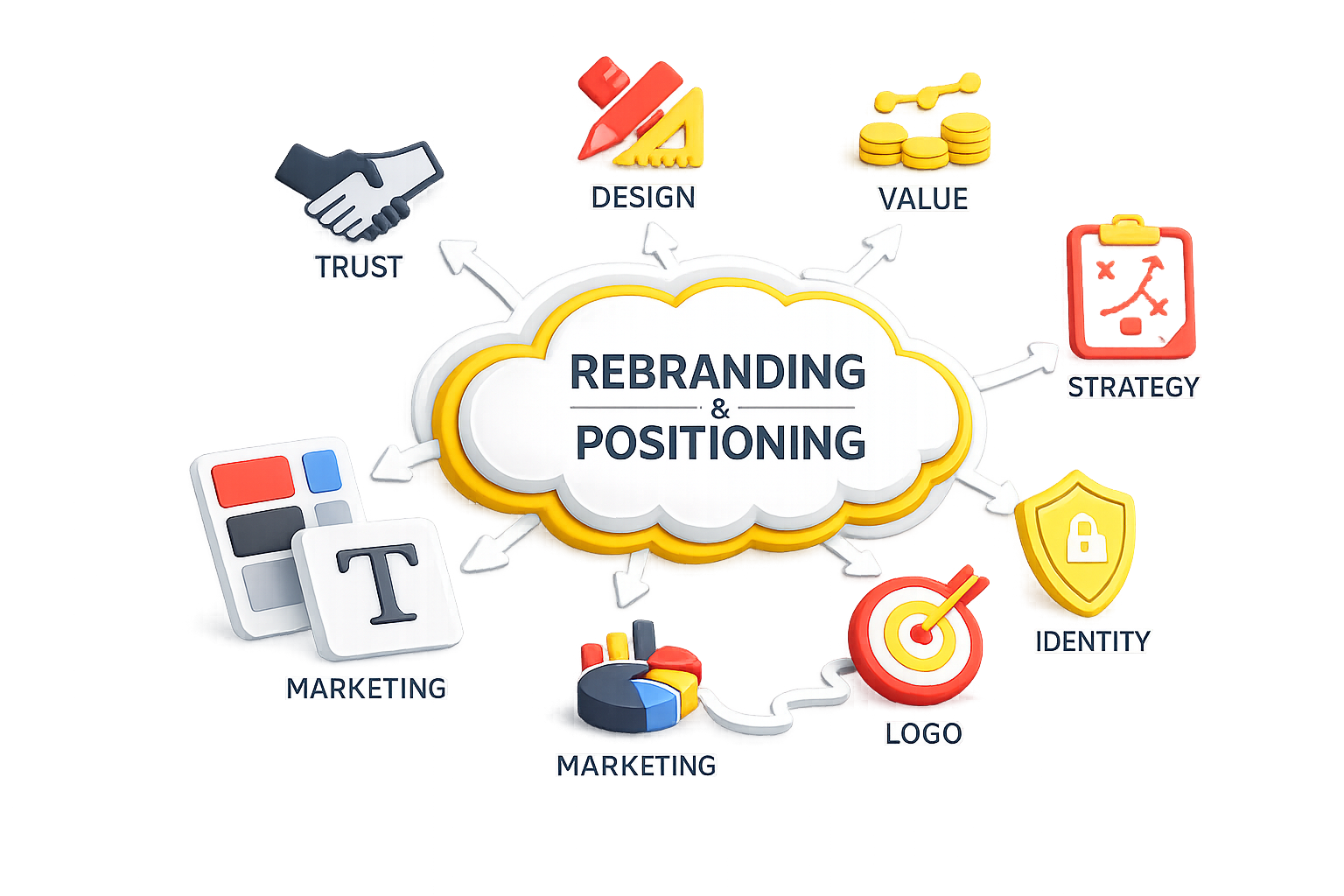
At Shartor, we help enterprises rebuild identity, reposition market value, and realign their brand story for the future.
This is not just a makeover — a strategic transformation.

Business Team

What Shartor Does for Enterprise Rebranding

01

Brand Audit & Market Insight

We uncover performance gaps, customer perception issues and hidden strengths shaping your brand today.

02

Strategic Positioning & Architecture

A future-ready structure that aligns your products, teams and markets under one strong brand direction.

03

Premium Visual Rebranding

An enterprise-grade identity that feels modern, authoritative and consistent across every platform.

04

Messaging & Communication Framework

A clear, credible voice crafted for customers, partners, investors and internal teams.

05

Enterprise Rollout Strategy

A seamless transition plan that launches your new identity without confusion or friction.

Enterprise Use Cases for Rebranding

01

Merger or Acquisition

When two organizations unite, the brand must unite too.

02

Outdated Brand Image

Refresh your presence to match modern expectations.

03

New Market Expansion

Your brand must speak to new regions and cultures.

04

Product/Service Shift

When the business evolves, the brand must evolve too.

05

Reputation Refresh

A strategic reset to rebuild trust and relevance.

06

Competitive Pressure

Stand apart with stronger positioning and clarity.

How Shartor’s Approach is Truly Different

Strategy-driven, not design-only

Every decision aligned with business goals, data & future direction.

Enterprise-grade research & insight

Leadership inputs, trend mapping, competitive depth analysis.

Global brand thinking

Built to scale across markets, cultures & audience layers.

Long-term positioning

We anchor brands for the next 10 years — not 10 months.

Scalable identity systems

Consistent, expandable, enterprise-ready brand frameworks.

Clear stakeholder communication

Organisational alignment with clarity & brand confidence.

IMPACT AFTER REBRANDING

The Impact of Enterprise Rebranding

After Shartor’s rebranding & positioning, enterprises gain measurable trust, clarity and competitive strength.

01
Higher trust from customers & partners
02
Better internal brand alignment
03
Stronger competitive advantage
04
Increased brand visibility
05
Clearer message across teams
06
Faster business growth
07
Higher market authority

Rebranding & Positioning – Key Questions

1. What is enterprise rebranding?
Enterprise rebranding is a strategic transformation of a company’s identity, positioning, and perception in the market. It goes beyond visual changes and focuses on aligning the brand with current business goals, new market realities, and long-term growth.
2. Why do large enterprises need rebranding?
As markets evolve, enterprise brands must adapt to stay relevant. Rebranding helps correct outdated perceptions, communicate business evolution, and present a modern, unified identity across global markets. It ensures the brand reflects its true scale, capability, and ambition.
3. What signals indicate rebranding is needed?
Common indicators include outdated visuals, inconsistent messaging across teams, market confusion, expanding into new regions, introducing new product lines, or losing relevance against more modern competitors.
4. Does rebranding mean a full logo change?
Not always. Enterprise rebranding focuses on strategy first. The identity may be updated, refined, or completely transformed depending on what best communicates the new direction of the business.
5. Will rebranding affect customer trust?
If planned well, rebranding actually increases trust. It signals progress and shows that the company is evolving. A good example is Zomato, which rebranded from Foodiebay to Zomato without losing customer confidence—its modern identity helped customers trust the brand even more and supported rapid growth.
Scroll to Top