

E-commerce SEO optimizes product pages, categories, and website structure, and it betters user experience to rank higher in SERPs, build trust and credibility, and help buyers purchase more easily. SEO is a powerful marketing tool for businesses when used properly, in order to increase visibility and profitability.
This article guides readers through marketing. It considers technical aspects. It advises people practically for making an online store discoverable and successful.
Understanding E-commerce SEO: The Foundation of Online Visibility
E-commerce SEO helps bring attention and search traffic to your online store via the optimization of keywords, title tags, meta descriptions, image alt text, website speed, and site architecture for the satisfaction of both search engines and users. E-commerce SEO that is effective for rankings and conversions can improve them.
E-commerce SEO Element | Purpose |
Target Buyer-Intent Keywords | Attract quality website traffic from search and improve conversions. |
Site Structure | Provides user-friendly navigation and better indexing for search engines. |
Product Descriptions | Engages users, enhances keyword relevance, and improves rankings. |
Page Speed & UX | Improves user experience and reduces bounce rate for higher retention. |
A correctly optimized e-commerce site can result in more traffic through organic search, which can reduce the amount spent on paid advertising. It can also create the impression of trustworthiness.
Keyword research represents the first step in E-commerce SEO. Businesses must understand their target customers and the search terms that can convert best. A well-designed website can encourage visitors to stay longer and to buy from it. Schema marks up, mobile optimizes, and images optimize for improvements to a site’s search engine optimization (SEO).
Core E-commerce SEO Strategies for Maximum Impact
Effective search engine optimization combines technical elements and creative elements to improve rankings. It also drives traffic and increases awareness in search engines’ organic results.
1. Conduct Comprehensive Keyword Research
The first step is to establish which search terms potential customers search for. Long-tail keywords (for example, “buy eco-friendly water bottles online”) tend to convert better as they have higher commercial intent.
Use these insights to structure content around product categories, tags, and metadata. This improves both discoverability and relevance.
2. Optimize Product Pages for SEO
Each product page must serve as both a sales and SEO asset. Optimize the following elements:
- Product title with focus keywords
- Meta descriptions that encourage clicks
- Alt tags for images
- Clean URLs with descriptive text
Ensure your product descriptions are of high quality, original, and speak to the benefits, features, and emotions around your product.
3. Implement Technical SEO Enhancements
Search engines prioritize user-friendly and technically sound websites. Key elements include:
- Fast page loading times
- Secure HTTPS connections
- XML sitemaps for indexing
- Structured data for rich snippets
These factors help search engines crawl through your site, help search engines index your site, and improve the user experience.
4. Build a Logical Site Architecture
A logical site structure allows search engines and human visitors to navigate your website easily. Opt for a category hierarchy and breadcrumbs.
Good site architecture eases indexing, lowers bounce rates, and distributes link equity throughout the website.
Traditional Marketing vs. E-commerce SEO: A Performance Comparison
Understanding the differences of customary marketing and E-commerce SEO can help businesses stay competitive in an evolving world.
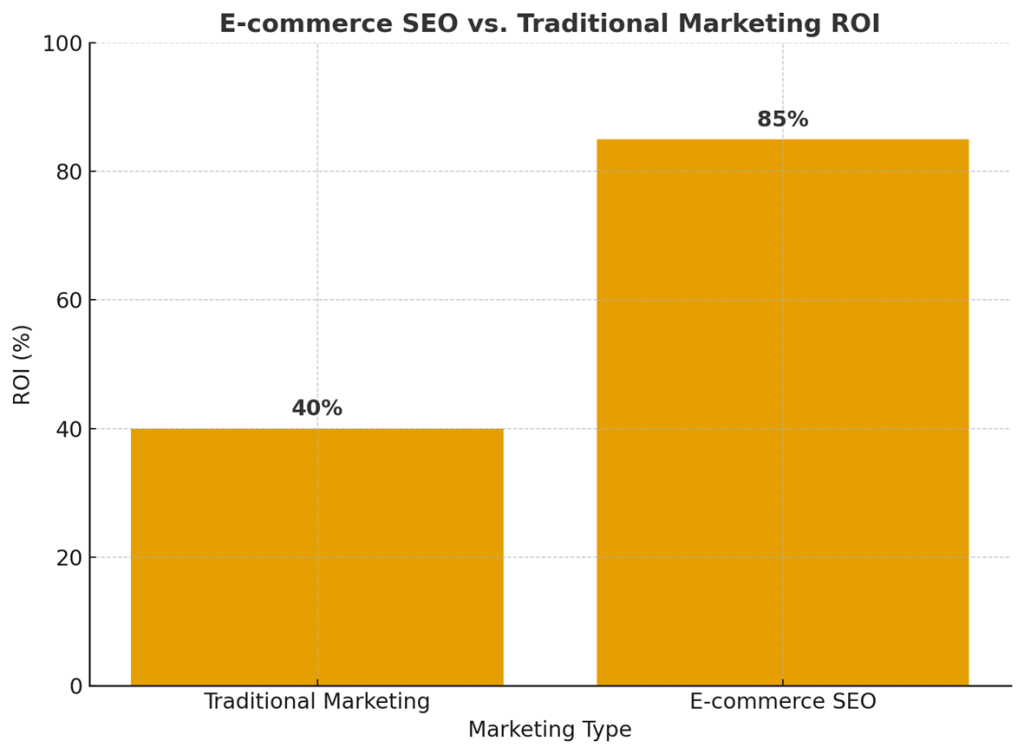
Aspect | Customary Marketing | E-commerce SEO |
Reach | Limited to physical or paid media | Global organic visibility |
Cost | Expensive | Active cost initially, cheaper long term |
Results Measurement | Difficult to track | Fully measurable with analytics |
Data-Driven Targeting | Targets broad and generic customer groups | Targets specific audiences using data insights |
E-commerce SEO joins your other marketing efforts to let people find and trust your online
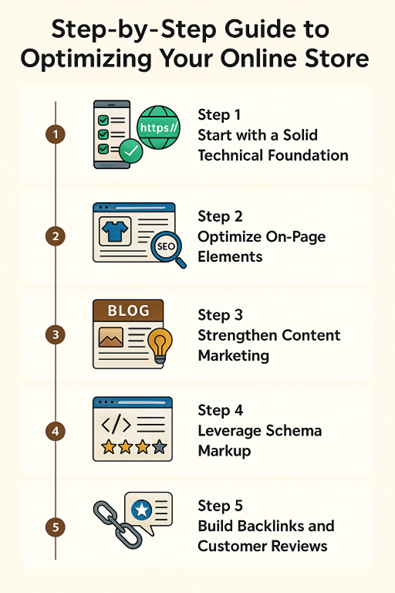
Step-by-Step Guide to Optimizing Your Online Store
Many things factor into improving upon the search engine optimization (SEO) of your online store, including:
Step 1: Start with a Solid Technical Foundation
Your website should be mobile-friendly. Your website should be fast. Your website should be secure through HTTPS usage. Keep your site in good shape through periodic checks for broken links and crawling issues.
Step 2: Optimize On-Page Elements
In product titles, meta tags, and URLs, use target keywords. Create unique product descriptions along with use of high-quality product images with descriptive alt tags.
Step 3: Strengthen Content Marketing
We publish SEO-optimized blogs, buying guides, and frequently asked questions (FAQs) as assistance to help you attract traffic and build authority.
Step 4: Leverage Schema Markup
Structured data use lets search engines understand content better. This often results in rich snippets with higher CTR.
Step 5: Build Backlinks and Customer Reviews
Connect to your website and good reviews. Ask happy customers to review your product, which can help with SEO.
When done correctly, this process transforms your store into an organic traffic powerhouse that converts visitors into loyal buyers.
E-commerce SEO as a Growth Catalyst
In conclusion, By focusing on strategic keyword integration, technical with precision and continual optimization businesses can achieve long-lasting visibility and customer loyalty. Get in touch with the experts of Shartor to boost SEO of your online store.
SEO continues to change with different algorithms, trends, and people; you can build authority and trust during time by planning and by continuing to optimize your store for the long-term. Good E-commerce SEO lets a business grow long-term and gives it competitive advantage against its competitors.